

Your logo on clothing is the first handshake your brand extends to a client, before a single word is spoken. If this visual message starts to crack or fade after three washes, you lose the trust built over years. Resolving the dilemma of embroidery vs. screen printing is, in reality, a strategic decision about how durable and credible your image should be in the eyes of your contractors.
You'd probably agree that nothing is more irritating than investing 4500 PLN in 100 sets of company clothing that looks worn out after just one season. You want your employees to feel proud wearing a logo that looks impeccable even after 50 wash cycles. In this guide, you will learn the key differences between these two techniques, so you can choose the marking method that best highlights your brand's professionalism in 2026. We will compare the costs, durability, and aesthetics of both solutions, pointing out the ideal path for your business's development.
Key Takeaways
- Learn why a conscious choice of marking method in 2026 is crucial for building a professional image and your brand's prestige.
- Understand the technical aspects of production and how precise vectorization and path programming affect the final durability of the logo.
- Understand the aesthetic and practical differences that determine whether embroidery or screen printing will work better for your project.
- Learn how to perfectly match the embellishment technique to the fabric weight and the specific work environment, from an elegant office to demanding physical conditions.
- Discover how combining modern technology with Polish sewing tradition allows for a unique effect of perfectly branded clothing.
Table of Contents
- Company Apparel Branding: Why the Choice Between Embroidery and Screen Printing is Crucial?
- Technical Aspects of Production: How is a Durable Logo Created?
- Head-to-Head: Embroidery vs. Screen Printing - Parameter Comparison
- How to Match the Method to the Type of Clothing and Intended Use?
- Personalized Apparel from Brandme: Your Brand in the Best Setting
Company Apparel Branding: Why the Choice Between Embroidery and Screen Printing is Crucial?
In 2026, visual identification on textiles is no longer just an add-on, but a strategic tool for building trust. Market data shows that 74% of Polish B2B clients assess a contractor's professionalism based on the consistent appearance of their team. The choice of embellishment technique is a business decision that affects the perceived value of a brand. The question of whether to choose embroidery or screen printing concerns not only aesthetics but, above all, the functionality and durability of the final product.
A wrong decision can ruin even the most expensive material. Applying heavy embroidery to a thin 130g T-shirt will cause unsightly puckering and discomfort when worn. Similarly, attempting screen printing on a high-pile fleece will result in an impermanent, ragged design. Precisely matching the method to the fabric protects the investment, which for corporate orders often exceeds 10,000 PLN.
Computer embroidery: Elegance that has structure
Computer embroidery is synonymous with prestige and a premium standard in the world of branding. The use of physical threads instead of paint gives the logo a unique, three-dimensional structure that is palpable to the touch. This method builds an image of a trustworthy and stable brand. It is the most durable form of marking, resistant to high-temperature washing and mechanical abrasion.
- 3D Effect: The raised pattern adds an exclusive character to the clothing.
- Indestructibility: Embroidery often outlasts the material it's applied to.
- Application: Ideal for polo shirts, fleeces, jackets, and snapback caps.
By choosing this method, you opt for quality that doesn't fade after 50 washes. It's an investment in details that make a difference during crucial business meetings.
Screen printing: Classic printing in a modern edition
For years, screen printing has dominated high-volume production thanks to its unparalleled precision and efficiency. In 2026, modern plastisol and water-based inks allow for perfect color reproduction from the Pantone Solid Coated palette. This is crucial for corporations that require strict adherence to their brand guidelines (CI). The smooth finish ensures that the print integrates with the fibers, remaining flexible and pleasant to the touch.
This method is most cost-effective for runs exceeding 50 pieces. It allows for the application of large graphics on the back or chest without excessively weighing down the garment. If you're wondering whether embroidery or screen printing is better for your case, consider the size of the design. For large-format graphics, screen printing is unmatched in terms of lightness and wearing comfort. Check out our ready-made solutions and quality standards at https://www.brandme.clothing/collections/all.
Technical Aspects of Production: How is a Durable Logo Created?
Professional clothing branding is a process where advanced technology meets artisanal precision. At Brandme's machine park, we rely on industrial-grade equipment that eliminates human error and ensures surgical accuracy. Everything begins in the professional preparation room. This is where our specialists analyze the design to assess whether embroidery or screen printing will be better suited for a specific case. Each method requires a different approach to the graphic file. Vectorization is standard, but the real engineering begins during the programming of needle paths or precise stencil exposure.
The quality of components directly translates into the lifespan of your brand. We use only certified threads and inks that do not lose saturation even after 50 wash cycles at high temperatures. Our production control system is based on full repeatability. Thanks to digital recording of technical parameters, every subsequent order for your company will look identical to the original made several months earlier.
The embroidery process - from thread to raised pattern
Computer embroidery is created by digitally designing the needle paths. The number of stitches is critically important for aesthetics; a standard chest logo 8 cm wide often involves 7,000 to 15,000 needle punctures. We use high-sheen polyester threads that are resistant to bleaching and washing at 95 degrees Celsius. To ensure the design is stable and doesn't pucker the material, a non-woven interlining of appropriate weight for the fabric is applied underneath. For fluffy knits, we use water-soluble film, which prevents the threads from sinking into the fabric structure, guaranteeing a perfectly smooth, raised effect.
The screen printing process - the magic of layers and stencils
Screen printing is a layered technique that works best for large print runs. The process begins with preparing the screens, where each color in the design requires a separate stencil and precise registration. Inks are applied directly to the fabric, controlling the squeegee pressure. The crucial stage is tunnel drying. The garment passes through a heating oven where the print is cured at 160 degrees Celsius. This permanently bonds the pigment to the fibers, ensuring flexibility and resistance to cracking even on large, flat surfaces.
Choosing the right technique is a strategic decision for your team's image. See how these advanced technologies transform raw cotton into a professional marketing tool by browsing our full range of premium apparel.
Head-to-Head: Embroidery vs. Screen Printing - Parameter Comparison
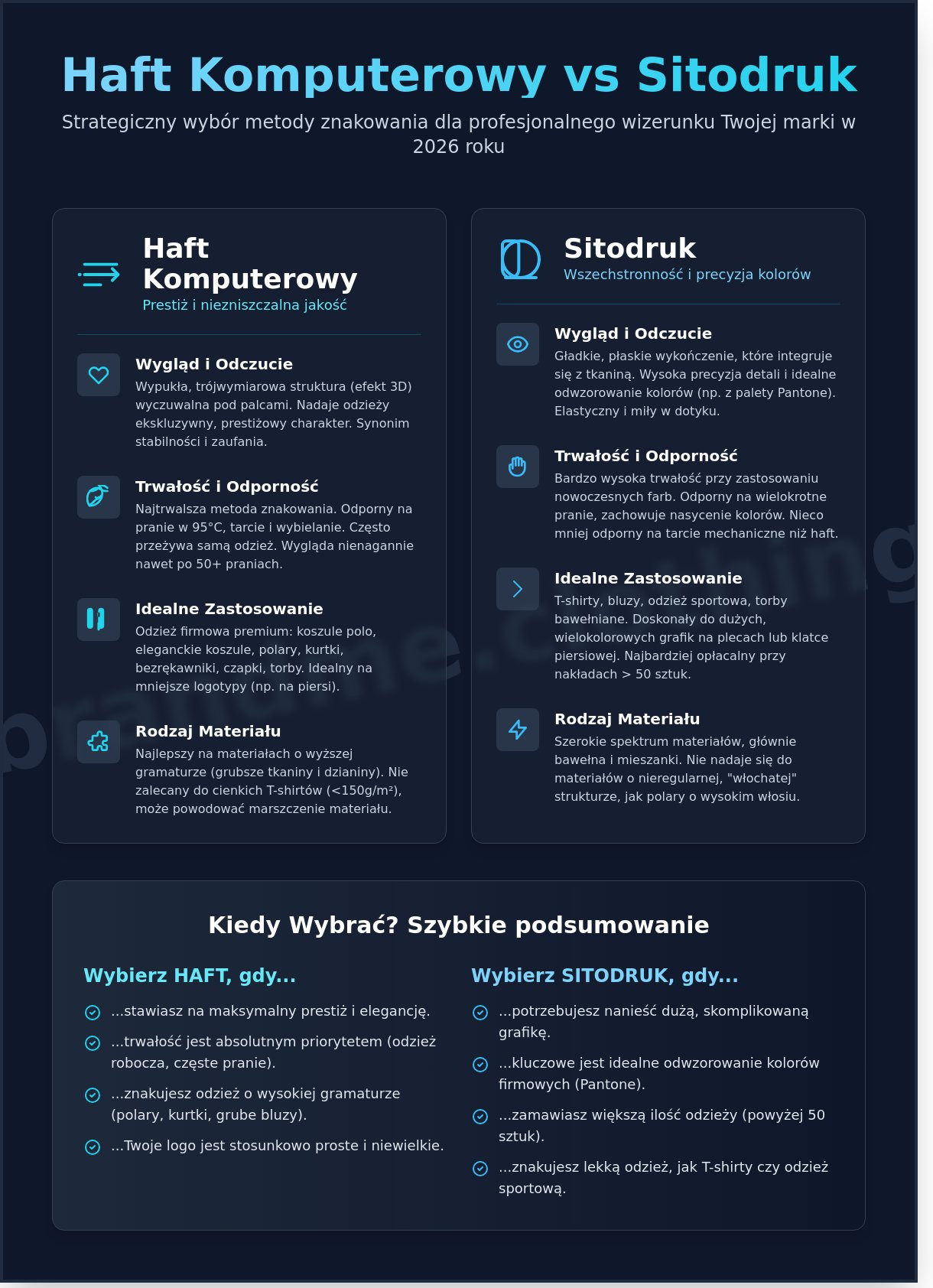
The choice between these two technologies is not just a matter of aesthetics. It's a strategic decision about how your brand will look after a year of intense garment use. Computer embroidery is synonymous with luxury and three-dimensional depth. Screen printing, on the other hand, offers unmatched smoothness and precision in reproducing complex graphics on large surfaces. When choosing between embroidery or screen printing, you must analyze the intended use of the clothing and the project budget.
The aesthetics of both methods differ drastically. Embroidery is characterized by the elegant sheen of polyester threads, which reflect light, giving the logo a prestigious appearance. Screen printing allows for a matte, satin, or glossy finish, depending on the type of ink used. In terms of comfort, screen printing wins for large graphics on the back, as modern water-based inks do not create a stiff "plate" and allow the material to breathe. Embroidery on large surfaces can stiffen the fabric, so it works best as a discreet logo on the chest or shoulder.
- Myth of cracking prints: High-quality screen printing cured at 160 degrees Celsius does not crack. Damage only occurs due to errors in the drying process or the use of the cheapest inks.
- Myth of fraying threads: Professional embroidery has a dense stitch and appropriate backing, which prevents accidental unraveling of an element.
Durability and wash resistance: What will last for years?
Computer embroidery is almost indestructible. It withstands boiling, ironing, and mechanical abrasion without losing color saturation. This is an ideal solution for the hospitality or construction industries, where workwear undergoes extreme tests. High-quality screen printing maintains an ideal appearance for approximately 50 to 80 wash cycles. To extend the life of the print, clothing should be washed inside out at a temperature of up to 40 degrees Celsius. Embroidery does not require such strict care, making it the most low-maintenance method.
Costs and profitability thresholds in 2026
In 2026, the Polish branding market focuses on personalization, which favors embroidery for low print runs. The cost of preparing an embroidery program is a one-time expense of around 70 to 150 PLN, making production cost-effective from as few as 5 pieces. For screen printing, the main cost is preparation, i.e., exposing the stencils. For a three-color design, the starting cost can be as high as 300 PLN. Therefore, screen printing only becomes competitively priced for orders above 50 or 100 pieces, where the unit cost drastically decreases. If you are planning a smaller, premium batch, check the assortment at BrandMe store and opt for embroidery.
The decision between embroidery or screen printing depends on the print run. For 20 event T-shirts, screen printing would be too expensive due to stencil costs. For 500 pieces, embroidery would be too slow and costly compared to rapid rotary printing. Always verify the unit cost in relation to the planned product durability.
How to Match the Method to the Type of Clothing and Intended Use?
The choice of embellishment technique is a business decision that affects the perception of your brand for 100% of the clothing's use time. When deciding whether embroidery or screen printing will be better for a given project, you must analyze the material's weight and the conditions under which the clothing will be used. Workwear for technical teams requires different durability than T-shirts distributed during one-day promotional events.
The weave and thickness of the fabric play a key role. Embroidering on very thin cotton with a weight below 150g/m2 often results in material deformation, as the dense stitch of the threads is simply heavier than the knit fabric itself. Conversely, screen printing on fluffy fleeces can lose legibility due to the fiber structure, which "absorbs" the ink. Before making a final decision, check our full range of products to perfectly select the base for your logo.
Hoodies and polo shirts - the kingdom of embroidery
Thick knit fabrics with weights from 280g/m2 to 320g/m2 are the ideal foundation for computer embroidery. A dense thread count requires stable support, which hoodies and classic polo shirts provide. Embroidery on the left chest is the market standard for elegant corporate apparel. It looks prestigious and maintains its original form even after 100 washes at high temperatures. We avoid this method for very thin promotional T-shirts. The weight of the threads causes a pulling effect on the material, which detracts from the aesthetics of the entire garment.
T-shirts and event apparel - why screen printing dominates?
For orders exceeding 50 pieces, screen printing becomes unrivaled in terms of unit costs. It allows for the application of large, impressive graphics on the back without excessively weighing down the material. On lightweight Premium T-shirts (160-180g/m2), prints made with water-based or plastisol inks are almost imperceptible to the touch. This solution dominates in creating modern music merchandise and apparel for dynamic start-ups. Screen printing excels at reproducing saturated colors from the Pantone palette, which is crucial for maintaining consistency in your company's visual identity.
Personalized Apparel from Brandme: Your Brand in the Best Setting
At Brandme, we combine Polish sewing tradition with the latest branding technology, allowing us to deliver products without any quality compromises. Our production facility is built on a decade of experience in textile processing, where artisanal precision meets automated printing machines. We treat each project individually. Our advisors will help you resolve the dilemma of whether embroidery or screen printing will work better for your case, considering the fabric's specifics and your planned budget. Choosing the right method is an investment in your image, so we analyze the fabric weight, from 180g for T-shirts to 340g for heavy hoodies, to ensure your branding withstands years of intensive use.
The quality of Brandme's apparel base is the foundation that enhances the final effect of every embellishment. We use exclusively selected combed cotton, characterized by a smooth weave, ideal for precise screen printing stencils. When planning your order for 2026, it's worth investing in clothing that not only looks good in visualizations but retains its shape after many washes. Our production process eliminates the risk of material shrinkage or print cracking, which directly translates into your team's satisfaction and the professional perception of your brand in the market.
From design to realization: Collaboration with Brandme
Every order begins with a rigorous verification of graphic files by our experts. We check line thickness and color separation, which guarantees that the final logo will be legible even with fine details. For selected methods, we offer personalization starting from just one piece, allowing for the creation of unique items for key business partners. Order fulfillment at Brandme usually takes 10 business days, and each batch undergoes quality control compliant with ISO standards, ensuring durability for years.
Build your merch with professionals
Modern merch is more than just a logo on a t-shirt. We are inspired by global trends where brands combine embroidery or screen printing in one collection, creating multidimensional designs. You can opt for minimalist embroidery on the chest and a large, expressive print on the back. We prioritize ecology, which is why our production predominantly uses certified viscose threads and water-based inks, safe for skin and the environment. Take the first step and see how to launch a clothing brand with our full substantive and technical support. Your vision deserves a setting that emphasizes its unique character.
Invest in an image that builds your customers' trust
The choice between embellishment techniques is a strategic decision that defines the perception of your business for years to come. When choosing embroidery or screen printing, you must be guided not only by aesthetics but, above all, by the intended use of the clothing and the material's weight. Precise computer embroidery will work best on thick hoodies, guaranteeing almost indestructible, high-prestige personalization. In turn, modern screen printing remains unrivaled for large print runs, offering perfect color reproduction and photographic detail accuracy.
At Brandme, we prioritize uncompromising quality, which is why our garments are sewn exclusively from certified Polish fabrics. You don't need to order hundreds of pieces for your team to look professional. We fulfill orders starting from just 1 piece, paying attention to every detail of your vision. Before we start our machines, you will receive a free verification of your graphic designs from us. This guarantees that the final result will be identical to your expectations. Your brand needs a setting that emphasizes its unique character and withstands intensive use.
Create your collection with Brandme - Check out our offer
Start building a strong visual identity today and see how your logo gains real value on top-quality products.
Frequently Asked Questions about Clothing Branding
Which is more durable: computer embroidery or screen printing?
Computer embroidery is the most durable decorating method, maintaining an impeccable appearance for 5 to 10 years of intensive use. The threads are resistant to mechanical abrasion and washing at temperatures up to 90 degrees Celsius. When choosing between options such as embroidery or screen printing, remember that screen prints withstand about 100 wash cycles before minor cracks begin to appear. Embroidery is an investment in quality that does not lose its value over time.
Can computer embroidery be used on every type of fabric?
Embroidery requires a stable base, so it works best on fabrics with a grammage above 180 g/m². Thin polyester materials or delicate 120 g/m² cotton may pucker under the thousands of needle strikes. We successfully use this method on fleeces, thick sweatshirts, caps, and polo shirts. For very thin t-shirts, a lighter print will be a better solution, as it will not burden the structure of the knitwear.
From how many pieces is it worthwhile to order clothing with screen printing?
Screen printing production becomes profitable for orders of a minimum of 20 to 30 pieces of one design. The cost of preparing matrices and exposing screens is then spread over a larger number of copies, which significantly reduces the unit price. For print runs exceeding 100 pieces, the cost of marking drops by almost 60% compared to small series. For individual personalized productions, embroidery or digital printing will be a more economical choice.
Does screen printing crack after machine washing?
Properly executed screen printing does not crack because the paint is permanently cured in a heating tunnel at 160 degrees Celsius. Mechanical damage usually appears only when low-quality paints are used or when the material is stretched by more than 40% of its original width. We use modern plastisol inks that maintain flexibility and structure even after 50 washes in home conditions. We ensure that every graphic is an integral part of the fabric.
What are the color limitations for embroidery?
The number of colors in embroidery is limited to 12 or 15 different thread shades, which results from the construction of embroidery machine heads. This technique does not allow for the reproduction of smooth gradients or photographic tonal transitions, which are the domain of printing. Each element of the design must have clear boundaries and be assigned to a specific thread number from the Pantone palette. If your project relies on complex shading, we will advise choosing separated screen printing.
Can I combine embroidery and screen printing on one hoodie?
Combining different marking techniques is an excellent way to create premium apparel that stands out in the market. We often implement projects with a small, raised embroidery on the chest and a large, detailed screen print on the back. Such a combination increases the perceived value of the product by 35% and builds a professional brand image. This strategic approach to design allows you to leverage the best features of both methods on one product.
How to prepare a graphic file for embroidery, and how for screen printing?
Both methods require vector files, such as .ai, .eps, or .pdf, with text converted to outlines. For embroidery, the graphic designer must also create a control program that defines the density of 5000 or more stitches. Screen printing, on the other hand, requires separating colors into separate layers for screen exposure. Avoid sending low-resolution .jpg files, as they do not allow for the preservation of precise details of your logo.
How much does it cost to prepare an embroidery program?
The development of a professional embroidery program is a one-time cost of 50 to 150 PLN net, depending on the complexity of the graphic. This price includes the digital processing of the logo into a language understandable by the machine and the creation of a test embroidery on test material. For orders over 50 pieces of clothing, we offer project preparation free of charge. Once created, the design is stored in our database, which eliminates this cost for all subsequent production reorders.